
Introduction
If you’ve been diagnosed with pancreatitis, one of the first questions you probably have is: what can I actually eat?
Diet plays an unusually large role in managing pancreatitis arguably more than with most other digestive conditions. The right foods can calm inflammation and support healing, while the wrong ones can trigger painful flare-ups.
This guide breaks down exactly what to eat, what to avoid, and how your diet should change depending on whether you have acute or chronic pancreatitis.
What Is Pancreatitis, Briefly?
The pancreas produces enzymes that help digest food and hormones that regulate blood sugar. Pancreatitis is inflammation of this organ.
- Acute pancreatitis is a sudden episode of inflammation, often severe, that usually improves with treatment and dietary changes over days to weeks.
- Chronic pancreatitis is long-term, progressive inflammation that gradually affects the pancreas’s ability to digest food and regulate blood sugar over time.
The dietary approach for each is different, which is why understanding your specific situation matters before making changes.
Why Diet Matters So Much in Pancreatitis
Every time you eat, especially fatty or heavy meals, your pancreas has to work to release digestive enzymes. In an inflamed pancreas, this workload can worsen pain and slow healing.
That’s why pancreatitis diets are generally built around one core principle: giving the pancreas less work to do, while still providing your body with enough nutrition to heal and maintain a healthy weight.
Research also shows that prolonged fasting isn’t the answer either. Modern medical guidelines have moved away from strict bowel rest, since eating the right foods early actually supports gut health and recovery better than starving the digestive system.
Foods to Eat With Pancreatitis
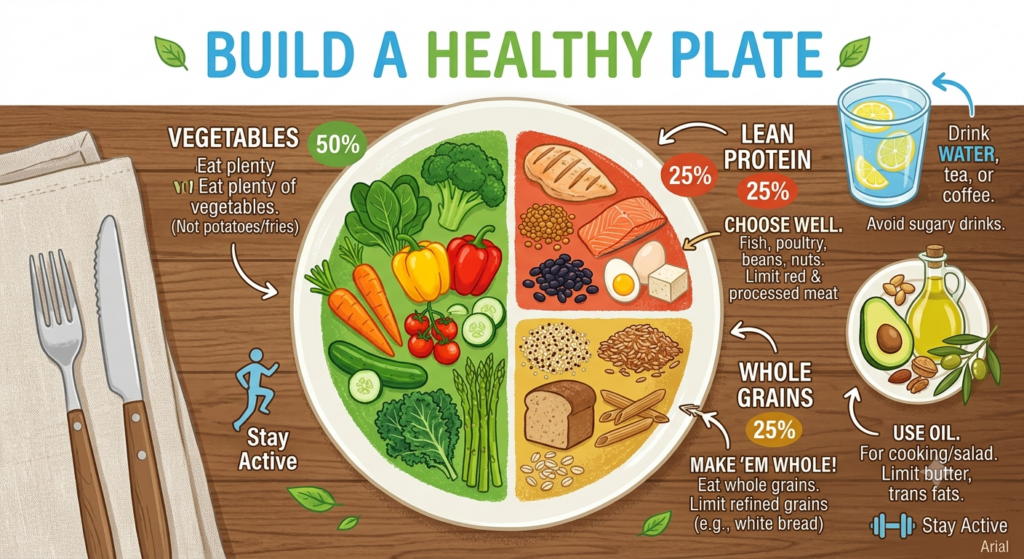
- Lean Protein Skinless chicken and turkey, white fish like cod and haddock, egg whites, tofu, lentils, and low-fat dairy provide protein without overloading the pancreas.
- Complex Carbohydrates Oatmeal, quinoa, brown rice, whole-grain bread, sweet potatoes, and whole-grain pasta are gentler on digestion than refined, sugary alternatives.
- Healthy Fats, in Moderation Small amounts of olive oil and flaxseed oil can be included. Medium-chain triglyceride (MCT) oil, available at pharmacies, is often recommended because it’s absorbed differently and puts less strain on the pancreas.
- Antioxidant-Rich Fruits and Vegetables Berries, pomegranates, apples, spinach, kale, and carrots help fight inflammation and support the body’s natural healing process.
- Fluids Plenty of water, clear broths, and herbal teas help keep you hydrated, which is especially important during flare-ups.
Foods to Avoid With Pancreatitis
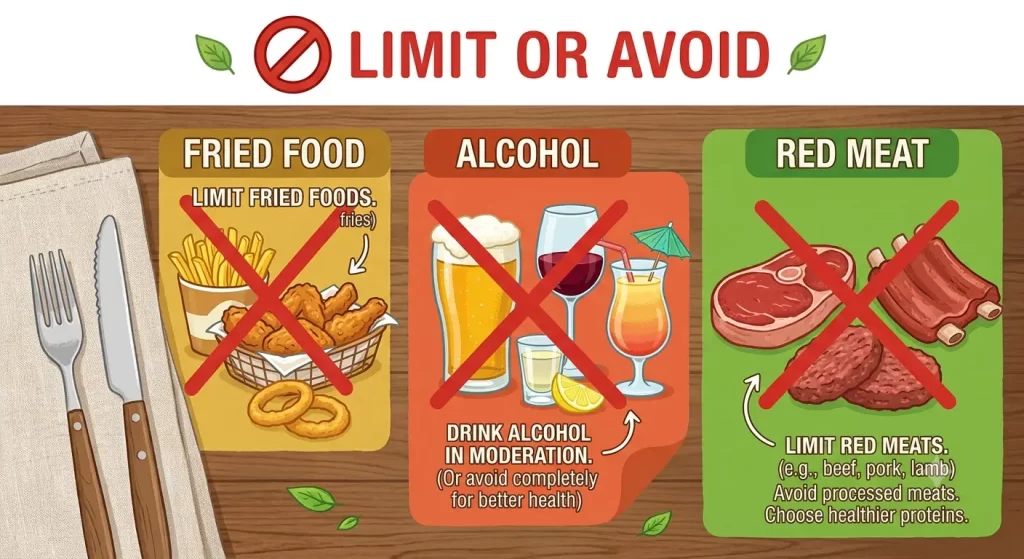
- Fatty and Fried Foods Deep-fried items, creamy sauces, and heavy fast food make the pancreas release more digestive enzymes, which can worsen pain.
- Red and Processed Meats Sausages, bacon, salami, and fatty cuts of red meat are high in saturated fat and harder to digest.
- Full-Fat Dairy Butter, heavy cream, and full-fat cheese add unnecessary fat load during recovery.
- Refined Sugar and Baked Goods Pastries, cakes, sugary cereals, and sweetened drinks can spike blood triglycerides, which is directly linked to pancreatitis flare-ups.
- Alcohol This is non-negotiable. Alcohol is one of the leading causes of pancreatitis, and continuing to drink after a diagnosis significantly increases the risk of the condition worsening.
Pancreatitis Diet Chart: Stage-by-Stage Guide
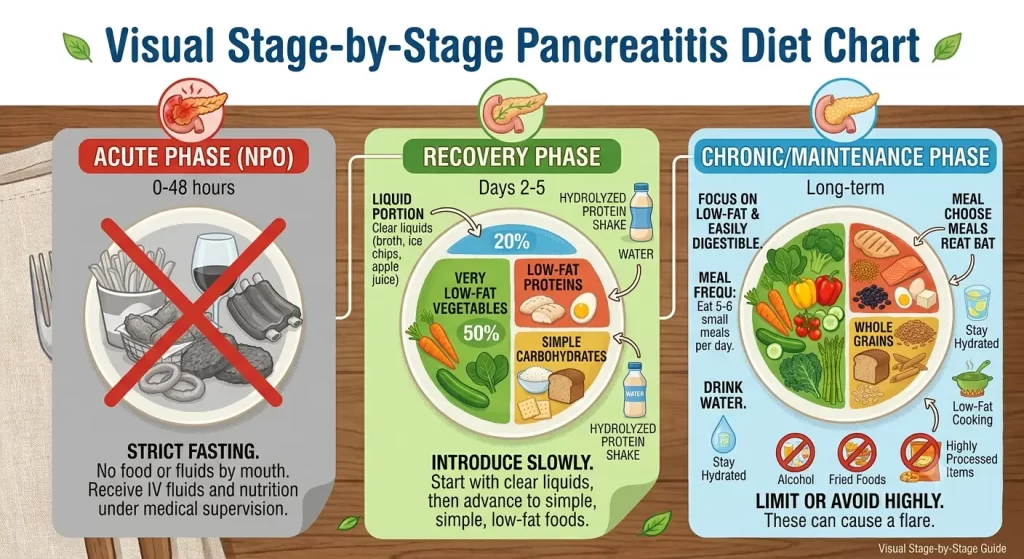
- During an Acute Flare-Up (First Few Days) Once severe pain starts improving, doctors typically recommend restarting food with clear liquids — broths, diluted juices, and plain water — before gradually moving to a soft, low-fat diet as tolerated. Waiting for lab results to fully normalize is usually not necessary before restarting light eating, based on current medical guidance.
- Recovery Phase (Following Weeks) As symptoms settle, a soft, low-fat diet with small, frequent meals (5–6 times a day rather than 3 large ones) is generally better tolerated than large meals.
- Chronic Pancreatitis (Long-Term Management) Contrary to older advice, most people with chronic pancreatitis do not need extreme, lifelong fat restriction. Overly restricting fat can lead to unwanted weight loss and vitamin deficiencies. Instead, a well-balanced, adequately-caloried diet — divided into smaller, frequent meals — is usually recommended, with fat limited only if a doctor identifies ongoing malabsorption. For a broader look at maintaining nutrition and digestive health after pancreas-related treatment, a dedicated recovery guide can help.
Special Considerations for Chronic Pancreatitis
- Pancreatic Enzyme Replacement Therapy (PERT) Many people with chronic pancreatitis develop difficulty digesting fat properly. In these cases, doctors may prescribe enzyme replacement capsules taken with meals to help the body properly absorb nutrients.
- The Fiber Paradox While fiber is generally healthy, very high-fiber diets can sometimes interfere with how well digestive enzymes work in people with chronic pancreatitis. If you’re on enzyme therapy and still experiencing symptoms, your doctor may suggest moderating fiber intake.
- Blood Sugar Monitoring Long-standing pancreatitis can affect the pancreas’s ability to regulate blood sugar. Regular meals with consistent carbohydrate portions can help keep blood sugar more stable.
Lifestyle Changes That Support Your Diet
Diet alone isn’t the full picture. Two habits make a significant difference in outcomes:
- Complete Alcohol Avoidance: Even small amounts can trigger flare-ups or accelerate long-term pancreatic damage.
- Quitting Smoking: Tobacco use is an independent risk factor for pancreatitis progression, separate from alcohol use, and quitting is strongly recommended regardless of drinking habits.
When to See a Doctor
If you’re experiencing ongoing abdominal pain, unexplained weight loss, or difficulty tolerating food despite dietary changes, it’s important to consult a specialist rather than managing symptoms through diet alone.
Dr. Nirav Vakani, a pancreas surgery specialist in Ahmedabad, provides comprehensive evaluation and treatment for both acute and chronic pancreatitis, including cases that require surgical intervention alongside dietary and medical management.