
Introduction
Occasionally struggling to swallow a large bite of food is normal. But when swallowing becomes consistently difficult, painful, or feels like food is getting stuck, it’s a sign worth paying attention to.
This condition is called dysphagia. It’s more common than most people realize, especially with age, and it can point to anything from mild acid reflux to more serious underlying conditions.
This guide explains what causes difficulty swallowing, which warning signs need urgent attention, and how it’s diagnosed and treated.
What Is Dysphagia?
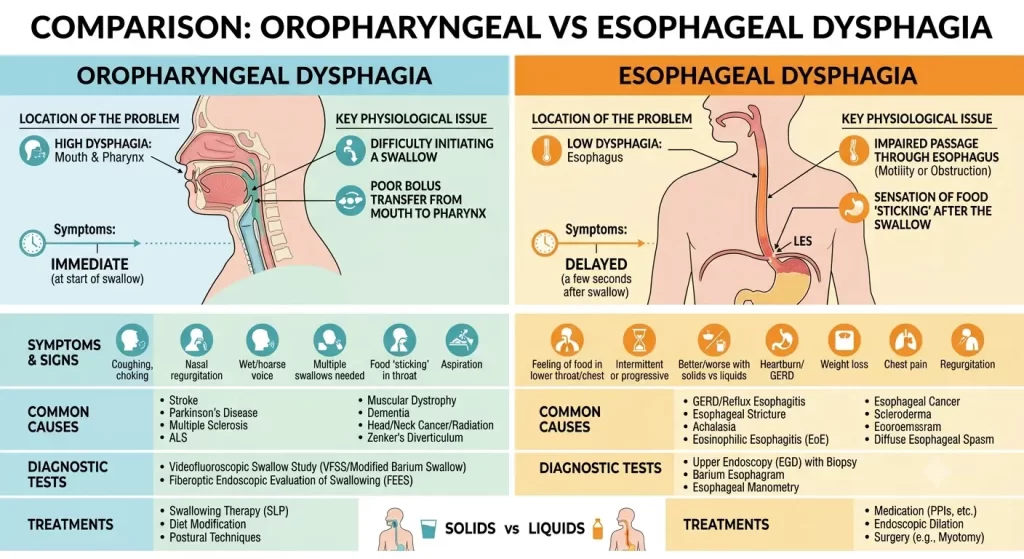
Dysphagia simply means difficulty swallowing. Doctors generally divide it into two types, based on where the problem occurs.
Oropharyngeal Dysphagia: Trouble starting a swallow. This often involves coughing, choking, or food coming back up through the nose right after eating.
Esophageal Dysphagia: A sensation of food getting stuck in the chest or throat a few seconds after swallowing. This is usually related to a problem further down, in the esophagus (food pipe).
Knowing which type you’re experiencing helps doctors narrow down the cause more quickly.
How Common Is Difficulty Swallowing?
Dysphagia becomes noticeably more common with age. Roughly 1 in 5 adults over 50 report some difficulty swallowing, and this rises to nearly 1 in 2 adults over 60.
It’s especially common after conditions like stroke, where a large proportion of patients experience swallowing difficulty in the initial recovery period. Parkinson’s disease and dementia are also strongly linked to swallowing problems as they progress.
Despite how common it is, dysphagia is often under-reported. Many people adapt their eating habits cutting food smaller, avoiding certain textures without realizing this is a sign to see a doctor.
Common Causes of Difficulty Swallowing
Dysphagia can stem from several different underlying issues:
- Acid Reflux and Esophagitis Chronic acid reflux (GERD) can inflame and eventually narrow the esophagus, making swallowing solid food increasingly difficult over time.
- Esophageal Strictures and Rings Scar tissue or a narrow band of tissue in the esophagus can create a physical obstruction, most often affecting solid foods first.
- Motility Disorders Conditions like achalasia affect how the esophagus muscles move food toward the stomach, causing difficulty with both liquids and solids from the start.
- Eosinophilic Esophagitis An allergic inflammation of the esophagus, increasingly seen in younger adults, that can cause intermittent swallowing difficulty or food getting stuck.
- Neurological Conditions Stroke, Parkinson’s disease, and other neurological conditions can affect the nerves and muscles that coordinate swallowing.
- Tumors or Growths A growth in the throat or esophagus, including esophageal cancer, can gradually narrow the passage, usually causing progressively worsening difficulty with solid foods.
- Medication-Related Causes Certain medications can cause dry mouth or, in some cases, irritate the esophagus directly, leading to sudden swallowing discomfort.
Warning Signs You Shouldn’t Ignore
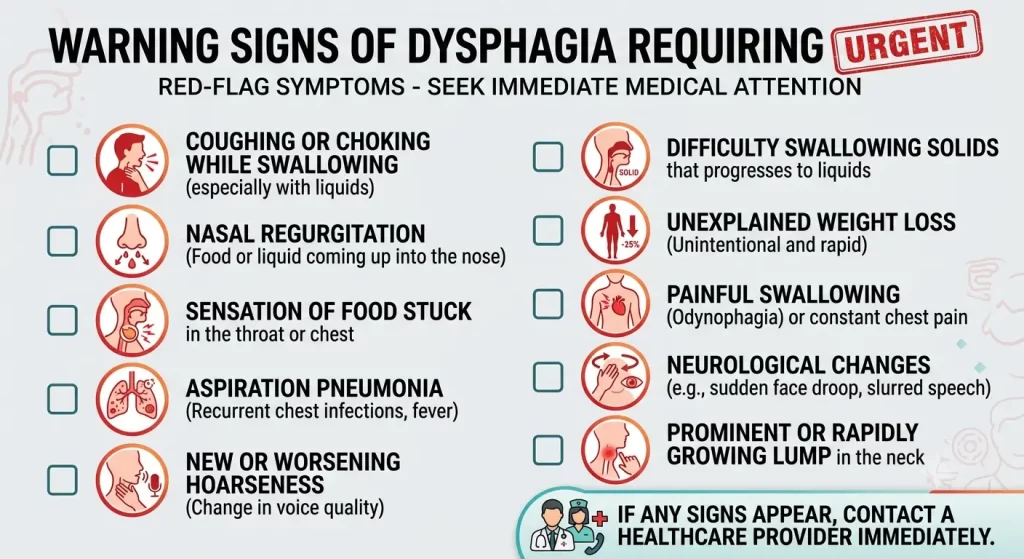
Most swallowing difficulty is manageable and treatable, but certain signs need urgent medical attention:
- Choking or coughing frequently while eating or drinking
- Food or liquid coming back up through the nose
- Drooling or being unable to manage your own saliva
- Pain while swallowing
- Unintentional weight loss
- Vomiting blood or noticing dark, tarry stools
- New hoarseness that doesn’t go away
- A lump or swelling in the neck
If you notice any of these alongside difficulty swallowing, don’t wait – see a doctor promptly.
When Is Difficulty Swallowing an Emergency?
Some situations require immediate emergency care, not a scheduled appointment.
Call 108 immediately if:
- You or someone else is choking and cannot breathe or speak
- Food feels completely stuck and won’t go down, with visible distress
- There is difficulty breathing along with swallowing trouble
For less severe but persistent symptoms — like ongoing food-sticking sensations, unintended weight loss, or repeated choking episodes — schedule a
How Is Dysphagia Diagnosed?
Diagnosis usually starts with a detailed conversation about your symptoms, followed by targeted tests:
- Physical & Swallow Examination Your doctor will examine your mouth, throat, and neck, and may observe you swallowing a small sip of water to check for any immediate signs of difficulty.
- Endoscopy (EGD) A thin, flexible camera is used to directly view the esophagus. This can identify strictures, inflammation, or growths, and allows for biopsy or treatment during the same procedure.
- Barium Swallow Study You swallow a special liquid that shows up on X-ray, allowing doctors to watch how food moves through your throat and esophagus in real time.
- Esophageal Manometry A specialized test that measures muscle contractions in the esophagus, used when a motility disorder like achalasia is suspected.
- Your doctor will choose the right combination of tests based on your specific symptoms and history.
Treatment Options for Dysphagia
Treatment depends entirely on the underlying cause:
- For Acid Reflux-Related Strictures: Acid-suppressing medication combined with a procedure called dilation, which gently widens the narrowed area of the esophagus.
- For Motility Disorders (like Achalasia): Options range from minimally invasive dilation procedures to a specialized surgical or endoscopic muscle-relaxing procedure, depending on severity.
- For Structural Blockages or Tumors: Treatment may involve endoscopic removal, dilation, or surgery, depending on the cause and location.
- For Neurological Causes: Swallowing therapy with a speech-language pathologist, along with dietary adjustments like thickened liquids, is often the primary approach.
- For Eosinophilic Esophagitis: Dietary changes or medication to reduce inflammation, sometimes combined with gentle dilation if needed.
Living with Dysphagia: Diet & Lifestyle Tips
While being evaluated or during treatment, a few adjustments can make eating safer and more comfortable:
- Eat slowly and take smaller bites
- Sit upright while eating and for at least 30 minutes afterward
- Chew food thoroughly before swallowing
- Avoid very dry, crumbly, or sticky foods if solids are difficult
- Stay well-hydrated, sipping fluids between bites rather than large gulps
These are supportive measures only they don’t replace a proper diagnosis if symptoms persist.
When to Consult a Specialist
If difficulty swallowing lasts more than a few days, keeps recurring, or comes with any of the warning signs listed above, it’s time to consult a gastrointestinal specialist rather than waiting it out.
Dr. Nirav Vakani, an experienced esophagus surgery specialist in Ahmedabad, evaluates swallowing difficulties thoroughly from initial diagnosis through to advanced endoscopic and surgical treatment when needed to identify the underlying cause and recommend the safest, most effective treatment path.