
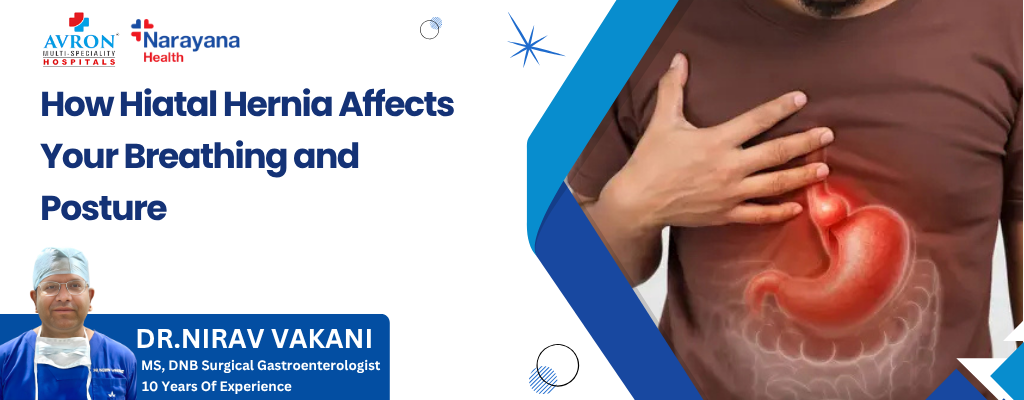
When people hear the term hiatal hernia, they often think only of acidity or reflux. But for many patients in Ahmedabad, a hiatal hernia affects much more than digestion. It can influence breathing quality, posture, and even overall body mechanics. Understanding these hidden effects can help you recognize symptoms earlier and seek timely guidance from a qualified specialist such as Dr. Nirav Vakani, a trusted gastroenterology expert in Ahmedabad.
In this article, we explore how a hiatal hernia impacts your diaphragm, posture, and respiratory function-along with when to consider evaluation or hiatal hernia treatment in Ahmedabad.
What Exactly Is a Hiatal Hernia?
A hiatal hernia occurs when a part of the stomach pushes upward through the diaphragm into the chest cavity. The diaphragm is the dome-shaped muscle responsible for breathing. When its natural function is disrupted, patients may experience:
- Chest tightness
- Shortness of breath
- Difficulty taking deep breaths
- Unusual fatigue
- Poor posture or upper-back tension
This is why many people search for terms like “hiatal hernia and breathing problems” without realizing how closely these issues are connected.
Why Hiatal Hernia Causes Breathing Problems?
Most patients don’t expect a digestive issue to interfere with their breathing. But anatomically, the diaphragm and esophageal opening sit extremely close, which means any change-like a hernia-can alter how well the diaphragm works.
1. Diaphragm Dysfunction: The Hidden Link
Many individuals unknowingly experience diaphragm dysfunction hiatal hernia, which occurs when the hernia restricts the diaphragm’s ability to contract and relax normally. This leads to:
- Shallow breathing
- Shortness of breath during exertion
- A feeling of “air hunger”
Some patients mistake these symptoms for asthma or anxiety, delaying proper diagnosis.
2. Reduced Lung Expansion
A hernia can occupy space in the chest cavity, restricting how much the lungs can expand. When this happens, even simple activities-walking upstairs, carrying groceries-may feel unusually tiring.
3. Nerve Irritation
The vagus and phrenic nerves help regulate breathing, heart rate, and digestive function. A hiatal hernia can irritate these nerves, contributing to chest discomfort and irregular breathing sensations.
If you’re experiencing these issues in Ahmedabad, a professional evaluation by a gastroenterology specialist such as Dr. Nirav Vakani can help identify whether the culprit is a hiatal hernia or another condition.
How Hiatal Hernia Affects Posture?
Another lesser-known issue is “hiatal hernia posture issues.”
Because the body attempts to relieve pressure around the diaphragm, many people unconsciously alter their posture. This may include:
- Hunching forward
- Lifting the chest unnaturally
- Tensing upper-back muscles
- Tilting the pelvis to reduce abdominal pressure
Over time, these compensations can cause:
- Persistent back pain
- Neck and shoulder tightness
- Fatigue while standing or sitting
Treating the hernia or improving diaphragm function often helps posture return to normal.
Who Is at Risk?
Hiatal hernia is more common among:
- People over 40
- Individuals with chronic coughing
- Those who lift heavy objects frequently
- People who are overweight
- Individuals with poor posture or weak core muscles
Residents of busy cities like Ahmedabad-who deal with stressful jobs, sedentary lifestyles, or long commutes-may unknowingly increase abdominal pressure, raising the risk of a hiatal hernia.
When Should You Seek Hiatal Hernia Treatment in Ahmedabad?
Symptoms that warrant medical evaluation include:
- Persistent acidity or reflux
- Difficulty swallowing
- Breathing difficulties
- Chest pressure unrelated to heart conditions
- Chronic cough
- Postural discomfort
A skilled specialist can recommend whether lifestyle changes, medication, physiotherapy, or surgical options are appropriate.
If symptoms are severe or persistent, some patients may be candidates for hiatal hernia surgery in Ahmedabad. Surgery is generally considered when:
- Reflux doesn’t respond to treatment
- The hernia is large
- There are complications like strangulation
- Breathing is significantly affected
Only a qualified gastroenterologist can guide these decisions.
Why Ahmedabad Patients Trust Experts Like Dr. Nirav Vakani?
Choosing the right specialist is a crucial step toward effective treatment. Many patients in the region prefer consulting knowledgeable and experienced professionals such as Dr. Nirav Vakani, who is known for his patient-centric approach in gastroenterology care. While the term “Best gastroenterologist in Ahmedabad” is commonly searched online, what truly matters is finding someone who provides:
- Accurate diagnosis
- Personalized treatment
- Clear explanations
- Evidence-based care
These are qualities many patients look for when seeking reliable hiatal hernia guidance.
Managing Hiatal Hernia Symptoms at Home
While medical evaluation is essential, some supportive practices can reduce discomfort:
1. Eat Smaller, Slower Meals
Reduces abdominal pressure and minimizes reflux.
2. Avoid Heavy Lifting
Prevents worsening of the hernia.
3. Improve Posture
Using ergonomic chairs or practicing gentle stretching can relieve diaphragm tension.
4. Practice Deep Diaphragmatic Breathing
Helps retrain the diaphragm and relaxes the chest muscles.
5. Maintain a Healthy Weight
Supports abdominal and diaphragmatic health.
These steps do not replace professional advice but can improve day-to-day comfort.
Final Thoughts
A hiatal hernia is more than just a digestive issue. It affects breathing, posture, and overall quality of life-often without patients realizing the connection. If you’re experiencing hiatal hernia and breathing problems or postural changes, seeking evaluation from a skilled gastroenterologist in Ahmedabad, such as Dr. Nirav Vakani, can help you understand the underlying cause and choose the right treatment path.
Recognizing the hidden effects early can make a significant difference in long-term health and comfort.