
Introduction
Almost everyone gets an occasional stomachache after a meal. But when it happens regularly, or the pain is severe, it’s worth understanding why.
Post-meal stomach pain can come from something as simple as eating too fast, or it can signal a condition that needs medical attention. The location, timing, and pattern of your pain all offer clues.
This guide walks through 12 possible causes, the warning signs that mean you shouldn’t wait, and what to expect from diagnosis and treatment.
Why Does Eating Trigger Stomach Pain?
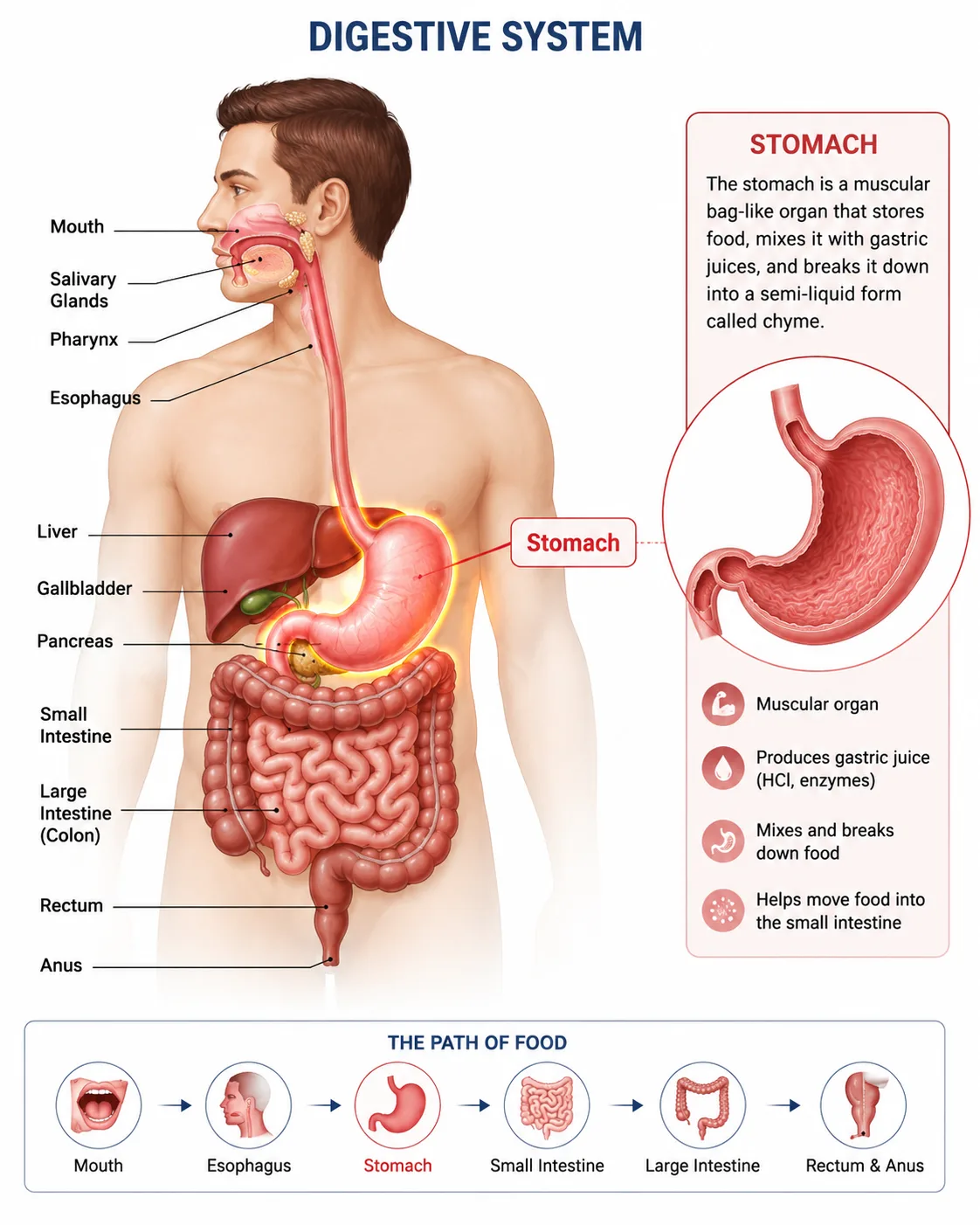
After a meal, your digestive system ramps up activity the stomach churns food, the gallbladder releases bile, and the pancreas sends out digestive enzymes.
If any part of this process is irritated, inflamed, obstructed, or not working efficiently, that increased activity can translate directly into pain.
That’s why paying attention to when the pain starts after eating, and where you feel it, is one of the most useful clues for figuring out the cause.
12 Possible Causes of Stomach Pain After Eating
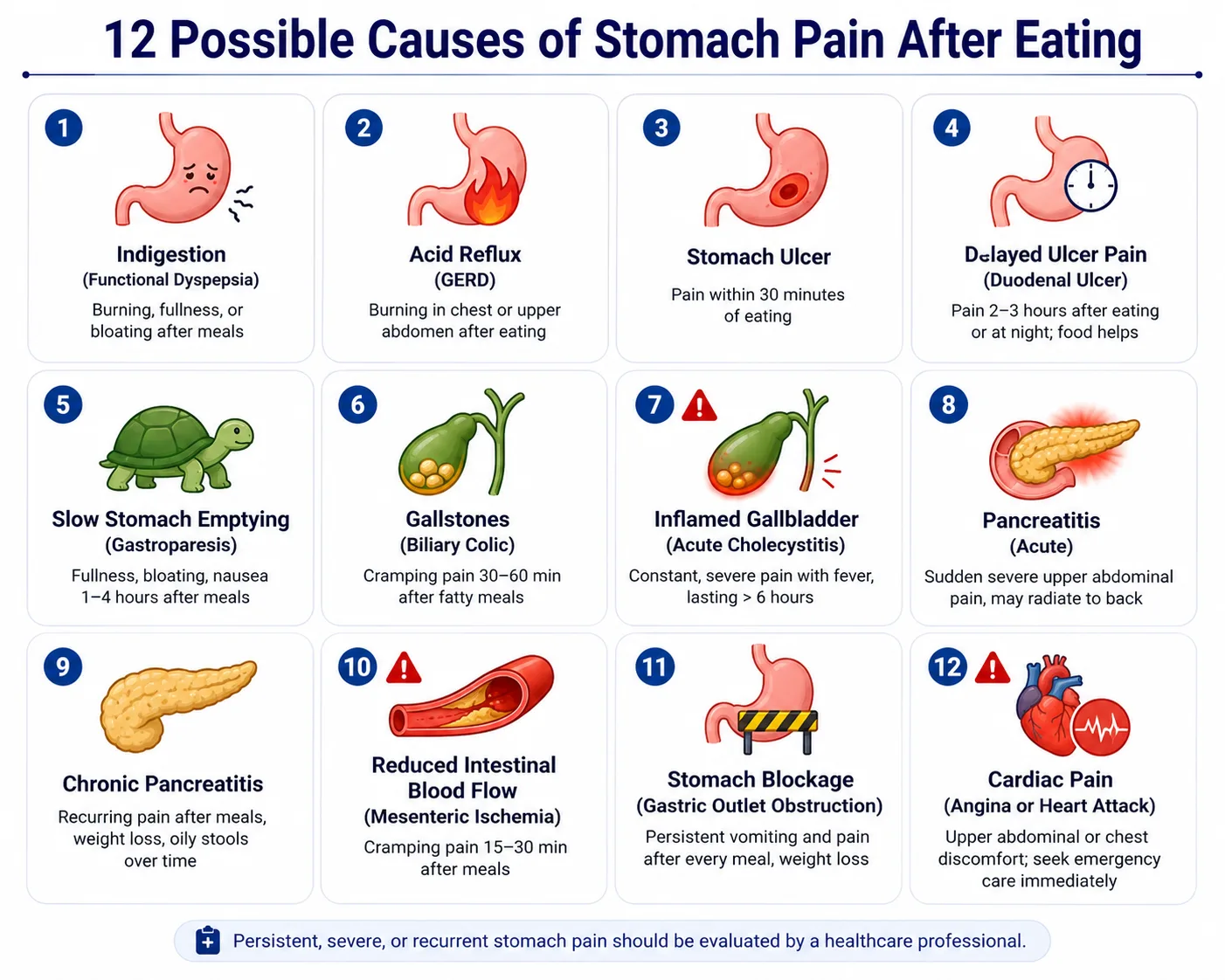
1. Functional Dyspepsia (Indigestion) A very common, non-structural digestive issue causing burning, fullness, or bloating shortly after meals. It’s benign but can be chronic, affecting roughly 1 in 5 adults, more often women.
2. Acid Reflux (GERD) A burning sensation in the chest or upper abdomen, often worse after large or fatty meals or when lying down. Linked to hiatal hernia, obesity, and certain foods.
3. Gastric Ulcer An open sore in the stomach lining that typically causes pain within 30 minutes of eating, since food directly irritates the ulcer. Often linked to H. pylori infection or long-term NSAID use.
4. Duodenal Ulcer Similar to a gastric ulcer, but located just past the stomach. Pain usually appears 2-3 hours after eating, or even at night, and food often provides temporary relief rather than triggering it.
5. Gastroparesis (Delayed Stomach Emptying) The stomach empties more slowly than it should, causing fullness, bloating, and sometimes vomiting of undigested food 1-4 hours after meals. More common in people with long-standing diabetes.
6. Gallstones (Biliary Colic) Sudden, cramping pain under the right ribs or in the upper abdomen, often radiating to the back or right shoulder. Classically triggered 30-60 minutes after a large or fatty meal, and usually resolves within a few hours.
7. Acute Cholecystitis (Gallbladder Inflammation) Similar to gallstone pain, but more constant and severe, often with fever and lasting more than 6 hours. This is a step up in seriousness from simple biliary colic and usually needs prompt treatment.
8. Acute Pancreatitis Sudden, severe pain in the upper abdomen that often radiates to the back, sometimes with nausea, vomiting, and fever. Most commonly linked to gallstones or alcohol use.
9. Chronic Pancreatitis Long-term, recurring pain after meals, often accompanied by unintentional weight loss and oily, foul-smelling stools over time. Usually related to long-standing heavy alcohol use.
10. Mesenteric Ischemia (Reduced Blood Flow to the Intestines) A less common but serious cause, mainly in older adults with blood vessel disease. Causes cramping pain 15-30 minutes after nearly every meal, sometimes leading people to fear eating altogether.
11. Gastric Outlet Obstruction A blockage from severe ulcer scarring or, less commonly, a tumor that prevents the stomach from emptying properly. Causes persistent vomiting and pain after every meal, along with weight loss.
12. Heart-Related Pain (Angina or Heart Attack) Sometimes, what feels like “stomach pain” after eating is actually the heart. This can cause upper abdominal or chest discomfort, especially in older adults or those with heart disease risk factors, and requires emergency evaluation.
Warning Signs You Should Never Ignore
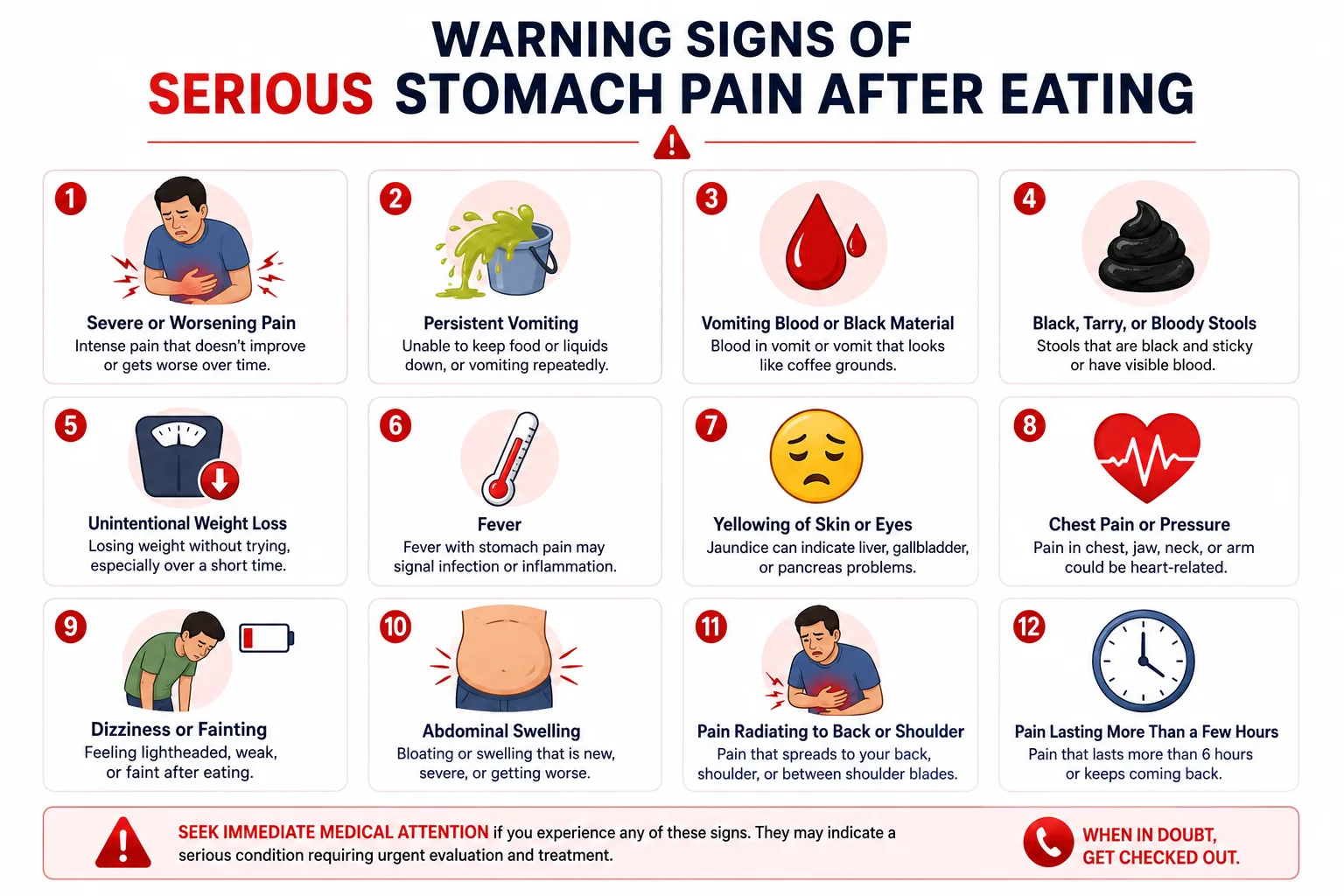
Most causes of post-meal stomach pain are manageable, but certain symptoms need urgent medical attention:
- Vomiting blood, or stools that are black and tarry
- Severe, unrelenting abdominal pain
- Fever along with abdominal pain
- Unexplained weight loss
- Difficulty swallowing
- Chest pain, pressure, or pain radiating to the arm or jaw
- Persistent vomiting or inability to keep food down
- Yellowing of the skin or eyes (jaundice)
If you notice chest pain, pressure, sweating, or shortness of breath along with your “stomach pain” especially after eating treat it as a possible heart-related emergency and seek immediate care.
When to Seek Emergency Care
Call 108 or go to the nearest emergency room immediately if you experience:
- Signs of a possible heart attack (chest pain, pressure, sweating, breathlessness)
- Severe abdominal pain that comes on suddenly and doesn’t improve
- Vomiting blood or passing black, tarry stools
- High fever with abdominal pain and yellowing of the skin
For persistent but less severe symptoms like recurring pain after most meals, ongoing bloating, or unexplained weight loss schedule a doctor’s appointment within a few days rather than waiting it out.
How Is the Cause Diagnosed?
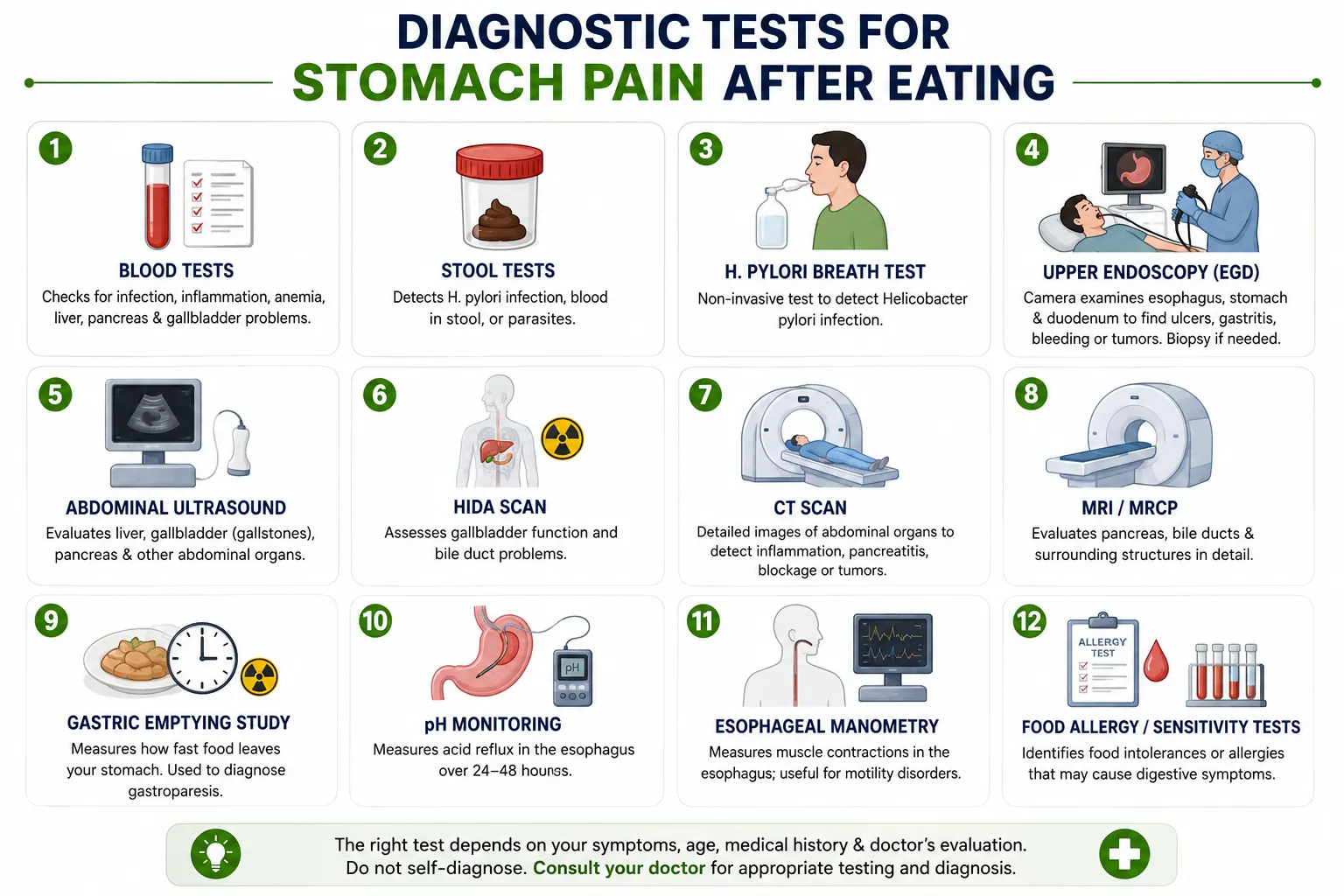
Since so many different conditions can cause similar symptoms, doctors typically start broad and narrow down based on your specific pattern of pain:
- History and Physical Exam: Understanding exactly when pain starts, where it’s located, and what makes it better or worse is often the biggest clue.
- Blood Tests: Can check for infection, inflammation, pancreatic involvement, and liver function.
- Abdominal Ultrasound: The go-to test for detecting gallstones and gallbladder inflammation.
- Upper Endoscopy (EGD): Used to directly examine the stomach and duodenum for ulcers, inflammation, or blockages.
- CT Scan: Helpful for pancreatitis, complications, or when the diagnosis remains unclear after initial tests.
- ECG and Cardiac Tests: Done when heart-related causes are suspected, especially in older adults or those with risk factors.
Your doctor will select tests based on your specific symptom pattern rather than running every test for every patient.
Managing Mild, Occasional Stomach Pain
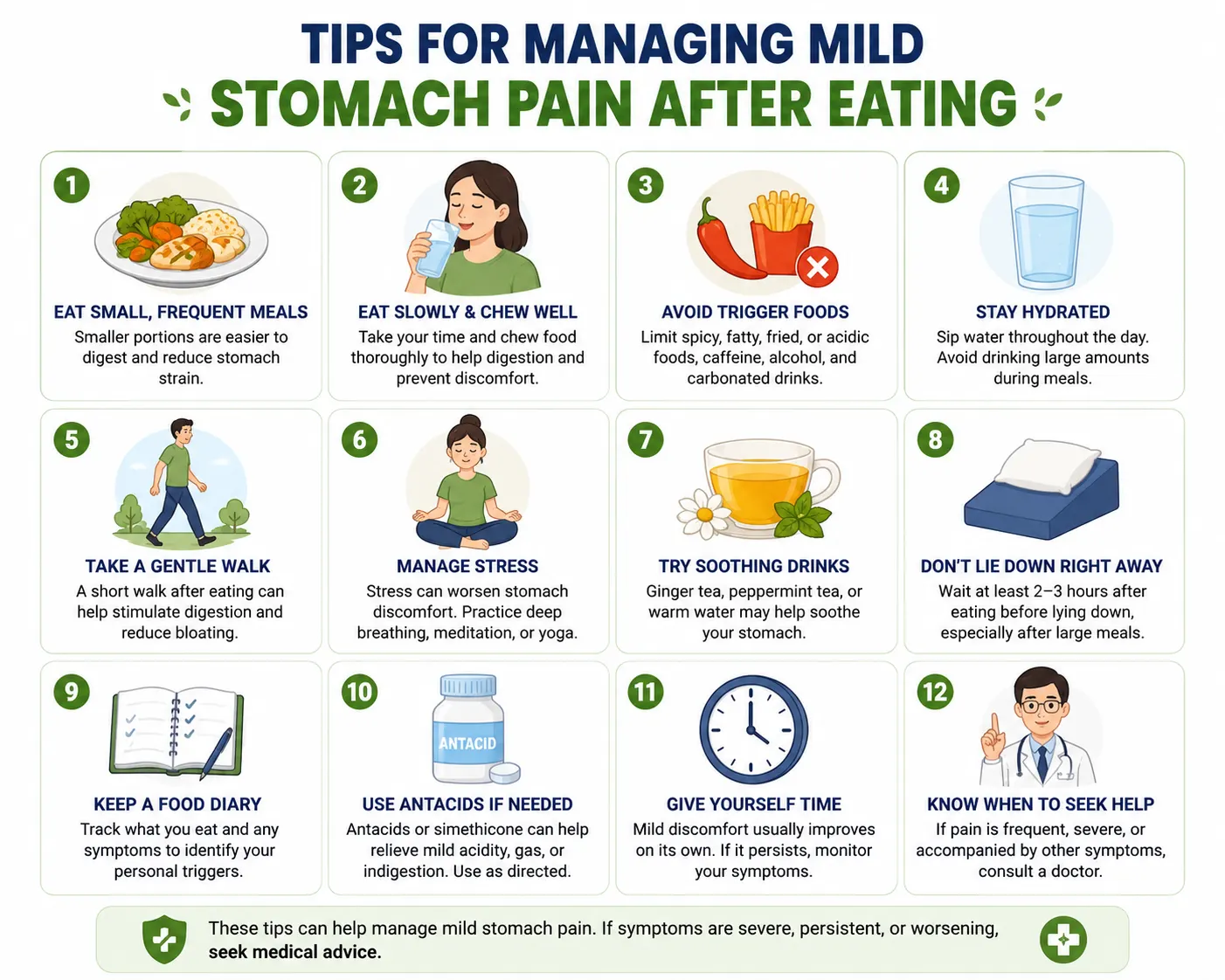
For mild, infrequent discomfort without any warning signs, a few simple changes often help:
- Eat smaller, more frequent meals instead of large ones
- Eat slowly and avoid rushing through meals
- Limit fatty, fried, or spicy trigger foods
- Avoid lying down immediately after eating
- Stay hydrated, and moderate alcohol and caffeine intake
These steps help with mild, functional discomfort, but they are not a substitute for medical evaluation if pain is severe, persistent, or accompanied by any warning signs.
When to See a Specialist
If stomach pain after eating is frequent, worsening, or accompanied by any warning signs, it’s time to move from home management to a proper medical evaluation.
Dr. Nirav Vakani, a gastroenterologist and gastro surgeon in Ahmedabad, evaluates recurring abdominal pain thoroughly from initial diagnosis through to treatment of conditions like gallstones, ulcers, and pancreatitis to identify the underlying cause and guide you toward lasting relief.