
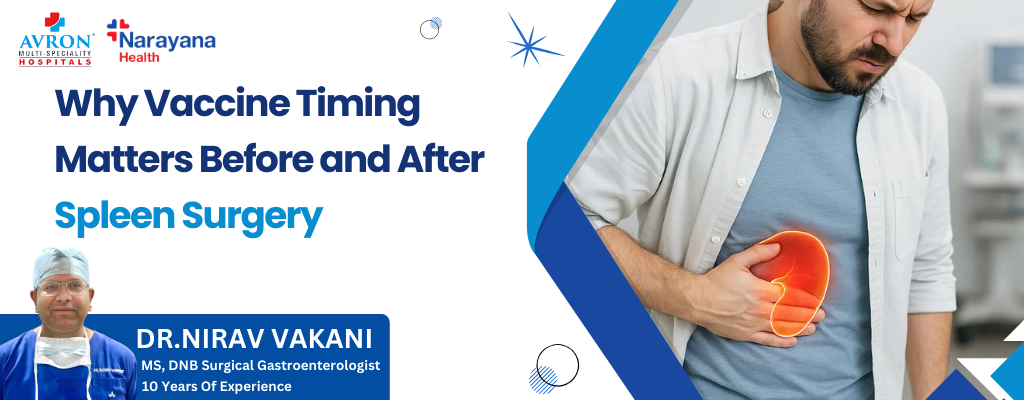
Spleen surgery, medically known as splenectomy, can be life-saving-but it also brings permanent changes to how the body fights infections. One of the most critical yet often overlooked aspects of care is vaccination before and after spleen surgery. Proper vaccine timing can significantly reduce the risk of serious, even life-threatening infections after spleen removal.
For patients planning spleen surgery in Ahmedabad, understanding this timeline and consulting an experienced specialist is essential.
Why Is the Spleen Important for Immunity?
The spleen plays a major role in filtering bacteria from the blood and supporting the immune system, especially against encapsulated bacteria such as Streptococcus pneumoniae and Neisseria meningitidis. Once the spleen is removed, the body becomes more vulnerable to severe infections, including overwhelming post-splenectomy infection (OPSI).
This is why vaccines needed after spleen removal are not optional-they are a critical part of long-term survival and health.
Vaccination Before Spleen Surgery: Why Timing Matters
When spleen surgery is planned (elective splenectomy), vaccines should ideally be given at least 2 weeks before surgery. This allows the immune system to mount a strong response while the spleen is still functioning.
Benefits of pre-surgery vaccination:
- Better antibody response
- Lower infection risk after surgery
- Reduced chances of post-operative complications
Patients preparing for surgery should discuss their splenectomy vaccination schedule in advance with a qualified spleen surgery specialist in Ahmedabad to ensure nothing is missed.
Vaccination After Spleen Surgery: What If Surgery Was an Emergency?
In trauma cases or emergency splenectomy, vaccines cannot be given beforehand. In such situations, vaccinations are usually administered 7–14 days after surgery, once the patient is stable.
Delaying vaccines beyond this period can significantly increase infection risk. This makes post-operative follow-up extremely important.
Splenectomy Vaccination Schedule: What Vaccines Are Required?
A standard splenectomy vaccination schedule includes protection against the most dangerous bacteria:
Core vaccines include:
- Pneumococcal vaccines (PCV and PPSV types)
- Meningococcal vaccines
- Haemophilus influenzae type B (Hib)
- Annual influenza vaccine
Some patients may also require booster doses over time. Your doctor will customize the schedule based on age, medical history, and previous immunization status.
Long-Term Care After Spleen Removal
Vaccination is not a one-time step. Patients without a spleen must remain vigilant throughout life.
Key long-term precautions include:
- Keeping vaccinations up to date
- Seeking immediate medical care for fever
- Carrying a medical alert card or bracelet
- Periodic follow-up with a specialist
This is where choosing the Best gastroenterologist in Ahmedabad becomes crucial for long-term guidance and preventive care.
Why Choose Dr. Nirav Vakani for Spleen Surgery Care in Ahmedabad?
When it comes to spleen-related disorders and post-splenectomy care, expertise matters. Dr. Nirav Vakani is widely regarded as a Best gastroenterologist in Ahmedabad, known for his patient-centric approach and evidence-based treatment.
What sets him apart:
- Extensive experience in managing spleen disorders
- Strong focus on preventive care and vaccination planning
- Clear guidance on vaccination before and after spleen surgery
- Personalized long-term follow-up for splenectomy patients
Patients looking for a reliable spleen surgery specialist in Ahmedabad benefit from comprehensive care that goes beyond surgery alone.
FAQs Patients Commonly Ask
Is vaccination mandatory after spleen removal?
Yes. Vaccines are essential to prevent severe infections after splenectomy.
Can vaccines be delayed after spleen surgery?
Delays increase infection risk. Vaccines should be given within the recommended timeframe.
Do splenectomy patients need lifelong care?
Yes. Regular follow-up and booster vaccinations are part of lifelong care.
Final Thoughts
Understanding why vaccine timing matters before and after spleen surgery can make a life-saving difference. Whether surgery is planned or emergency-based, the right vaccination strategy dramatically lowers infection risks and improves long-term outcomes.
If you or a loved one is preparing for spleen surgery, consulting Dr. Nirav Vakani, a trusted Best gastroenterologist in Ahmedabad, ensures expert surgical care along with the critical preventive measures needed for a healthy future.