
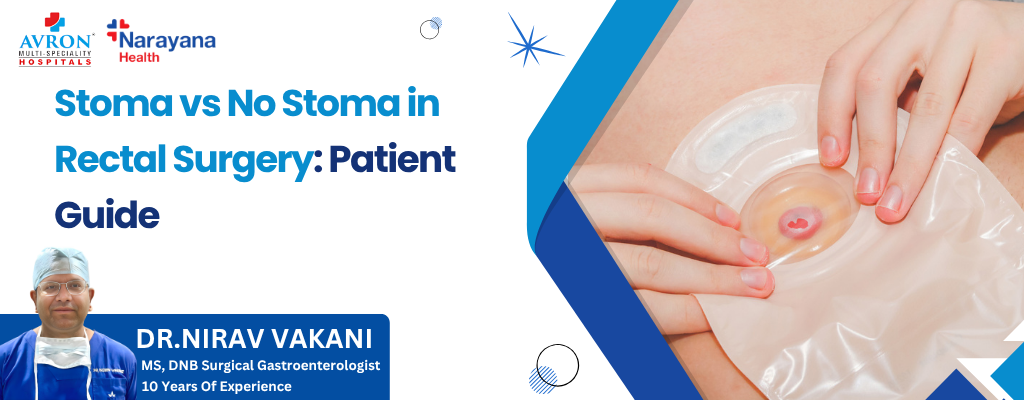
When facing rectal surgery, one of the most common concerns patients have is whether they will need a stoma. Understanding the difference between a stoma and no stoma approach can help you make informed decisions and reduce anxiety. This guide explains stoma vs no stoma rectal surgery in simple terms, especially for patients in Ahmedabad seeking expert care.
What Is a Stoma?
A stoma is a surgically created opening on the abdomen that allows waste to exit the body into a bag, bypassing the rectum. It may be:
- Temporary – to allow healing after surgery
- Permanent – when the rectum cannot be preserved
Stoma vs No Stoma Rectal Surgery: Key Difference
- No Stoma Surgery: The surgeon reconnects the bowel so you can pass stool normally.
- Stoma Surgery: Waste is diverted through an opening in the abdomen.
The choice depends on several medical and safety factors, not just patient preference.
When Is a Stoma Needed in Rectal Surgery?
A key patient question is: when is a stoma needed in rectal surgery?
Doctors may recommend a stoma in cases such as:
- Low rectal tumors (close to the anus)
- Rectal cancer surgeries where healing risk is high
- Severe infections or inflammation
- Emergency surgeries (like bowel perforation)
- To protect a new bowel connection (anastomosis)
A temporary stoma is often used as a safety measure to prevent complications.
Temporary vs Permanent Stoma Recovery and Lifestyle
Understanding temporary vs permanent stoma recovery and lifestyle is essential for peace of mind.
Temporary Stoma
- Usually reversed after 3–6 months
- Allows the intestine to heal safely
- Patients return to normal bowel function after reversal
Permanent Stoma
- Required when rectum removal is necessary
- Lifestyle adjustments are needed, but many patients live active, normal lives
Lifestyle Tips:
- Maintain a balanced diet
- Learn stoma care techniques
- Stay active and socially engaged
- Seek support groups if needed
Modern stoma care products make daily life much easier than many patients expect.
Can You Avoid a Stoma?
In some cases, yes. Advances in surgical techniques now allow many patients to avoid a permanent stoma. Options include:
- Sphincter-saving surgeries
- Minimally invasive procedures
- Careful patient selection and planning
However, avoiding a stoma should never compromise safety. The priority is always successful treatment and recovery.
Why Choosing the Right Specialist Matters?
The decision between stoma and no stoma depends heavily on surgical expertise. Consulting a highly experienced doctor ensures:
- Accurate diagnosis
- Personalized treatment planning
- Better chances of avoiding unnecessary stoma
- Lower complication risks
If you are searching for a Rectum Surgery Specialist in Ahmedabad or the Best gastroenterologist in Ahmedabad, consider consulting Dr. Nirav Vakani.
Why Patients Trust Dr. Nirav Vakani?
Dr. Nirav Vakani is widely recognized for advanced gastrointestinal and rectal treatments in Ahmedabad. Patients choose him because of:
- Expertise in complex rectal surgeries
- Focus on minimally invasive techniques
- Patient-centric decision-making
- Clear guidance on stoma vs no stoma options
His approach ensures that every patient receives the most suitable and safest treatment plan.
Frequently Asked Questions
1. Is a stoma always permanent?
No. Many stomas are temporary and can be reversed after healing.
2. Is life normal with a stoma?
Yes. With proper care, patients can work, travel, and live actively.
3. How do doctors decide between stoma and no stoma?
It depends on tumor location, health condition, and surgical safety.
4. Can I choose not to have a stoma?
The final decision is medical. Your surgeon will recommend the safest option.
Final Thoughts
Understanding stoma vs no stoma rectal surgery helps reduce fear and prepares you for informed discussions with your doctor. While the idea of a stoma can feel overwhelming, it is often a life-saving and temporary step toward recovery.
For patients in Ahmedabad, consulting Top gastroenterologist in Ahmedabad like Dr. Nirav Vakani ensures you receive the best guidance tailored to your condition.